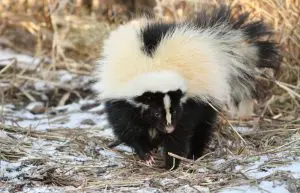
 Skunk (Mephitis mephitis) in winter As you’re pulling out sweaters, readying your fireplace, and preparing your home for holiday celebrations, skunks are also scoping out their winter housing options.
The striped skunk is the only species of skunk native to Ohio, and they are found in every county. They typically are black with a white stripe running down the back of their body, but the black hair may sometimes be brown, cream, or white.
The striped skunk is about the size of an average house cat, and males are slightly larger than females. Skunks are nocturnal, but sometimes they can be seen during the day if they’re searching for food for their young or are ill. They are most commonly found in rural areas; however, they are becoming more abundant in suburban and urban areas, as they continue to seek out food and shelter in these regions.
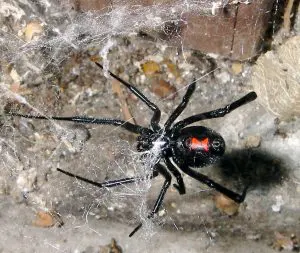 As you put up Halloween decorations and prepare for trick-or-treaters, make sure to keep your eyes peeled for some real creepy crawlers that could be lurking around your yard and home.
Ohio is home to more than 620 species of spiders…and all of them are venomous, except for one. The good news is, most of the time, spiders are not harmful to humans or pets, since the amount of venom they possess is minimal. Spiders have eight legs and two fangs, and they serve an important role in keeping other pest populations under control.
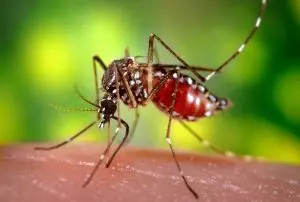 It’s time to defend the north… south, east, and west of your property against the one true enemy of the realm: mosquitoes.
You’ve survived winter and are eager to enjoy some time in your yard. The last thing you want is to be driven inside by pesky mosquitoes. Unfortunately, mosquitoes have been on the planet for over 150 million years and don’t seem to be going anywhere anytime soon. The resilient development of their eggs helps fuel and sustain the hardy population.
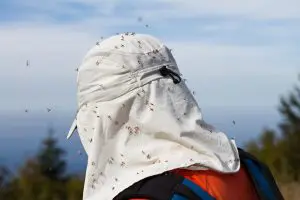 Flys on head[/caption]
Now that warmer weather has finally returned, everyone is anxious to get outside and do some yardwork and gardening. What’s the quickest way to thwart the excitement of being outdoors after a nearly six-month hiatus? Pests inhabiting your yard.
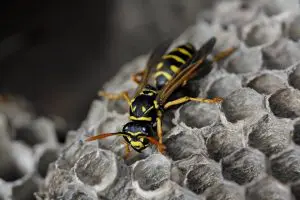 close up of single wasp among paper hexagon cells.Ohio is home to thousands of species of bees and wasps. As you venture outside this spring, you are more likely to cross paths with some more than others.
Paper wasps build their nests in residential homes, yards and gardens, community parks, and even barns and structures in rural areas. One reason in particular to watch out for paper wasps? They pack a mightier sting than your average sweat or honey bee.
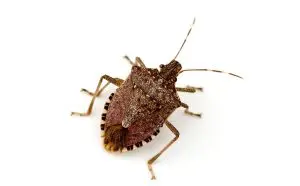 Brown Marmorated Stink Bug (Halyomorpha halys) on white backgroundAfter a long winter, it may seem like spring’s arrival has come at a crawling pace. March marks the official beginning of spring, as well as the unofficial launch of pest season. As temperatures warm up and moisture peaks, insects come creeping.
Just as different flowers bloom in the spring versus the summer, there is a seasonality to bugs. You’re more likely to see different species at certain times of the year, and spring pests are not for the faint-hearted.
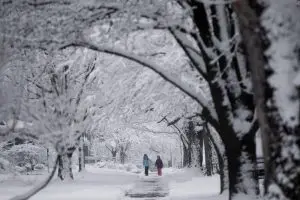
After a warm start to our winter here in the Miami Valley, we’ve certainly made up time with recent snow events and another visit from our friend, “Polar Vortex,” a few weeks ago.
While enduring cold winter weather can be annoying, some would argue it’s better than dealing with mosquitoes and other winged-nuisances that plague southwest Ohio in the summer months.
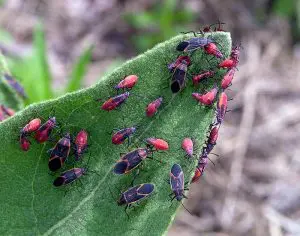
In the summertime, you probably don’t even notice them. During the warm weather days of spring and summer, the boxelder bug, Boisea trifittattus, quietly lives and breeds in boxelder and silver maple trees. Although they feed on the leaves, flowers and seed pods of these trees, they generally don’t cause any noticeable damage.
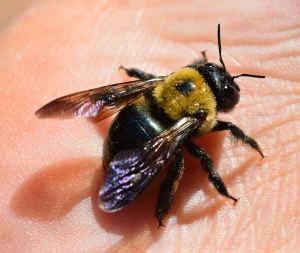
Have you noticed any holes in the wooden parts of your home? There are a variety of reasons for this, but if you notice your furniture is now made from dead wood – AND it also has holes, it may be because of carpenter bees. But carpenter bees are pretty cute, so what harm can they REALLY cause?
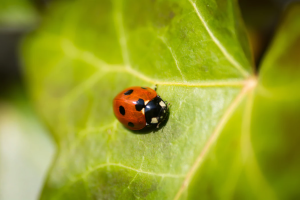 It’s common to freak out when you see a beetle in or near your home. Nobody wants them inside. However, did you know that these little critters play a very important role in the balance of our ecosystem? Losing just one species of insect can disable our ecosystem, which could eventually lead to the extinction of the human race. When thinking of a well-known insect, the beetle, it’s natural to wonder whether it’s a good one…or a bad one.